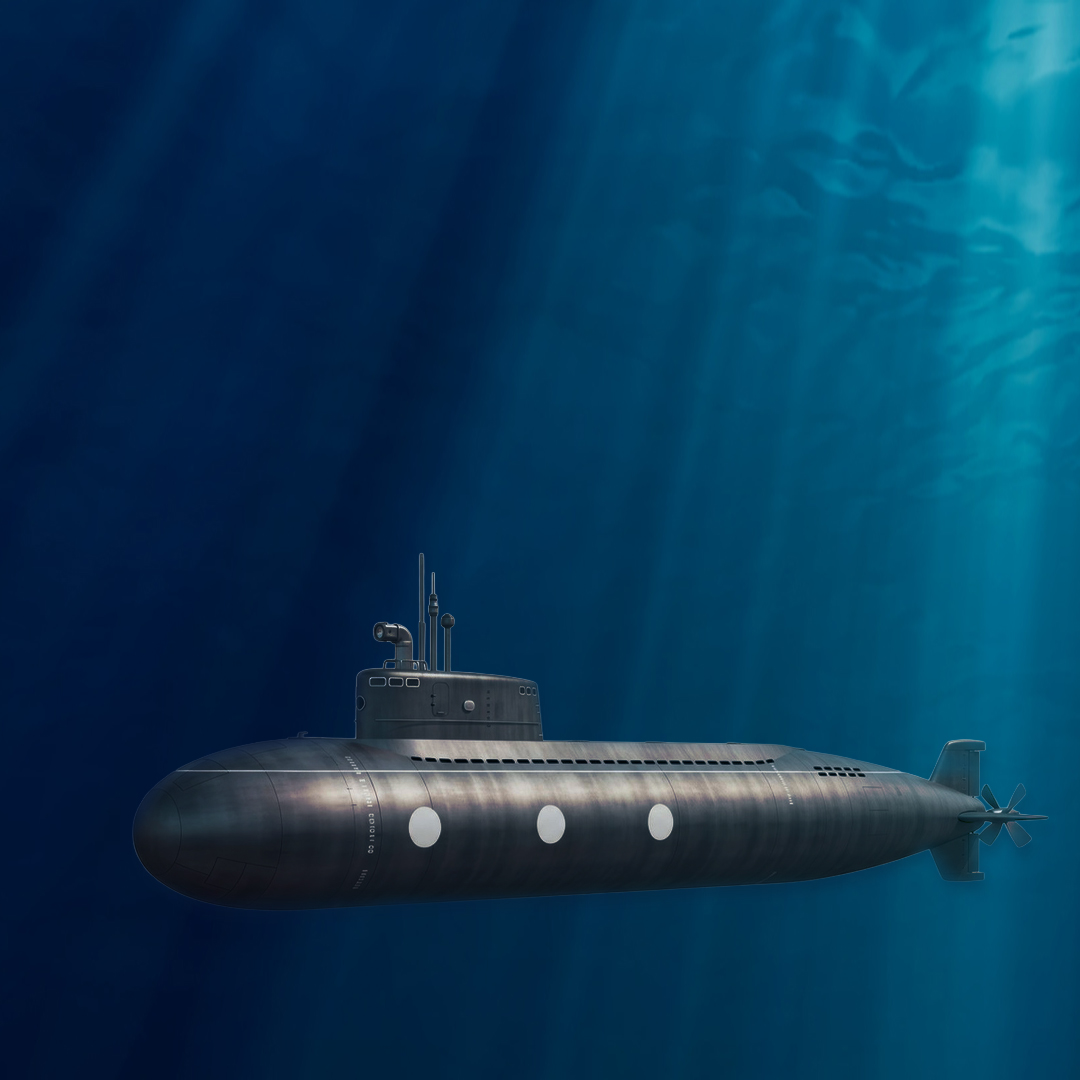
Marine & Ship Solution Marine & Ship Solution

Marine & Ship Solution

High-precision simulation for large-scale computing scenarios

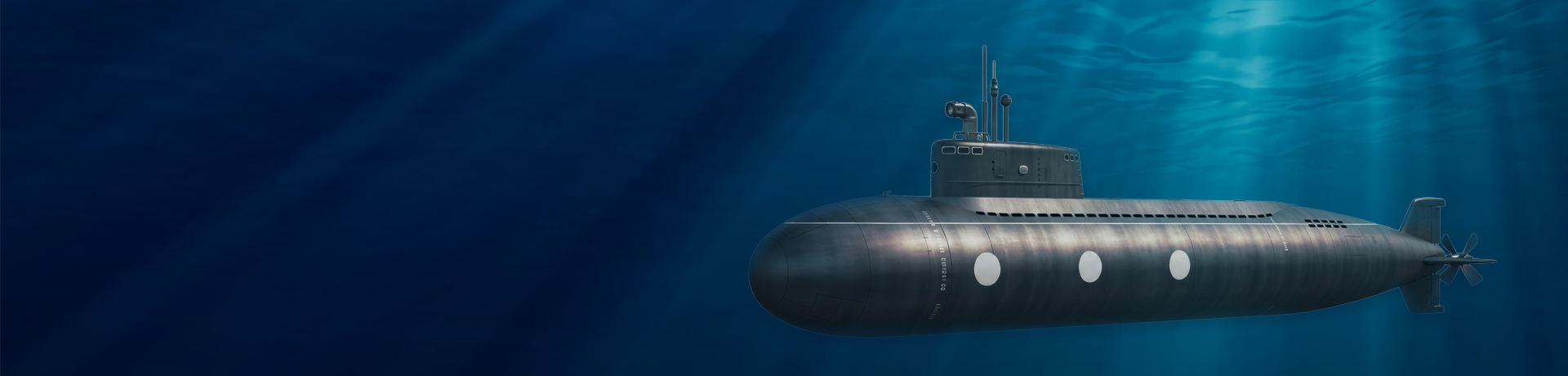
Support design optimization, noise control and simulation of complex motion scenarios for underwater vehicles

Industry Challenges

01

Multi-scale Conflict & Computing Power Bottleneck

Turbulence in water is mostly at high Reynolds numbers (in the order of 10⁶ to 10⁷). It is necessary to resolve both millimeter-scale near-wall boundary layers and meter-scale far-field wake multi-scale flows simultaneously. Traditional RANS models adopt simplified treatment and lose flow details. Wall-resolved LES requires extremely fine meshes (e.g. y+≈1), which leads to a sharp surge in mesh quantity (a typical submarine simulation requires over 100 million solution points). Top-tier supercomputers need to run continuously for months, resulting in high hardware and operation & maintenance costs and difficulties in iterative optimization
02

Insufficient Spatiotemporal Resolution

The speed of sound in water is approximately 1500 m/s (far higher than in air). Pulsating pressure signals feature extremely short time scales (microsecond level). Traditional RANS methods cannot capture high-frequency pulsations due to time averaging. Flow noise is strongly correlated with vortex shedding and pressure pulsation. Under high sound speed, noise sources have more scattered spatial distribution and require high spatiotemporal resolution for resolution. Existing methods suffer from inadequate resolution and great errors in noise prediction, failing to meet noise reduction requirements for submarines and other vessels
03

Lack of System-Level Simulation

Marine power systems involve multi-physics interactions such as propeller-hull coupling, thruster-appendage interference, and multiphase flow (e.g. cavitation-turbulence coupling). Traditional simulation only performs partial analysis of individual components and cannot account for system-level coupling effects. In addition, complex flows of pump-jet propulsors require multi-scale simulation. The computational cost of traditional software increases exponentially with scale span, and manual interfaces are required for multi-physics coupling, making system-level collaborative optimization difficult to achieve
04

Precision Limitations of Numerical Simulation

Cavitation is a typical gas-liquid two-phase flow in water, involving transient processes of bubble generation and collapse (microsecond scale), accompanied by high-pressure pulses (10⁸ Pa) and local high temperatures (thousands of Kelvin). Traditional methods use empirical cavitation models (such as Zwart-Gerber-Belamri), which cannot accurately capture bubble dynamics and its coupling with turbulence. Dramatic variations of phase interfaces impose high requirements on mesh adaptivity, and existing technologies tend to suffer from computational divergence caused by interface deformation. In engineering practice, prediction errors of parameters such as cavitation inception position and collapse intensity often exceed 30%, restricting drag reduction, noise reduction and material erosion-resistant design

Solution Overview

DIMAXER, the self-developed industrial simulation software of Rankyee Technology, leverages innovative algorithms and efficient computing frameworks to deliver high-precision, low-cost ship & underwater solutions covering the full workflow of "preprocessing - solving - postprocessing" for large-scale computing scenarios (billions of degrees of freedom). It supports design optimization, noise control and complex motion simulation of underwater vehicles.
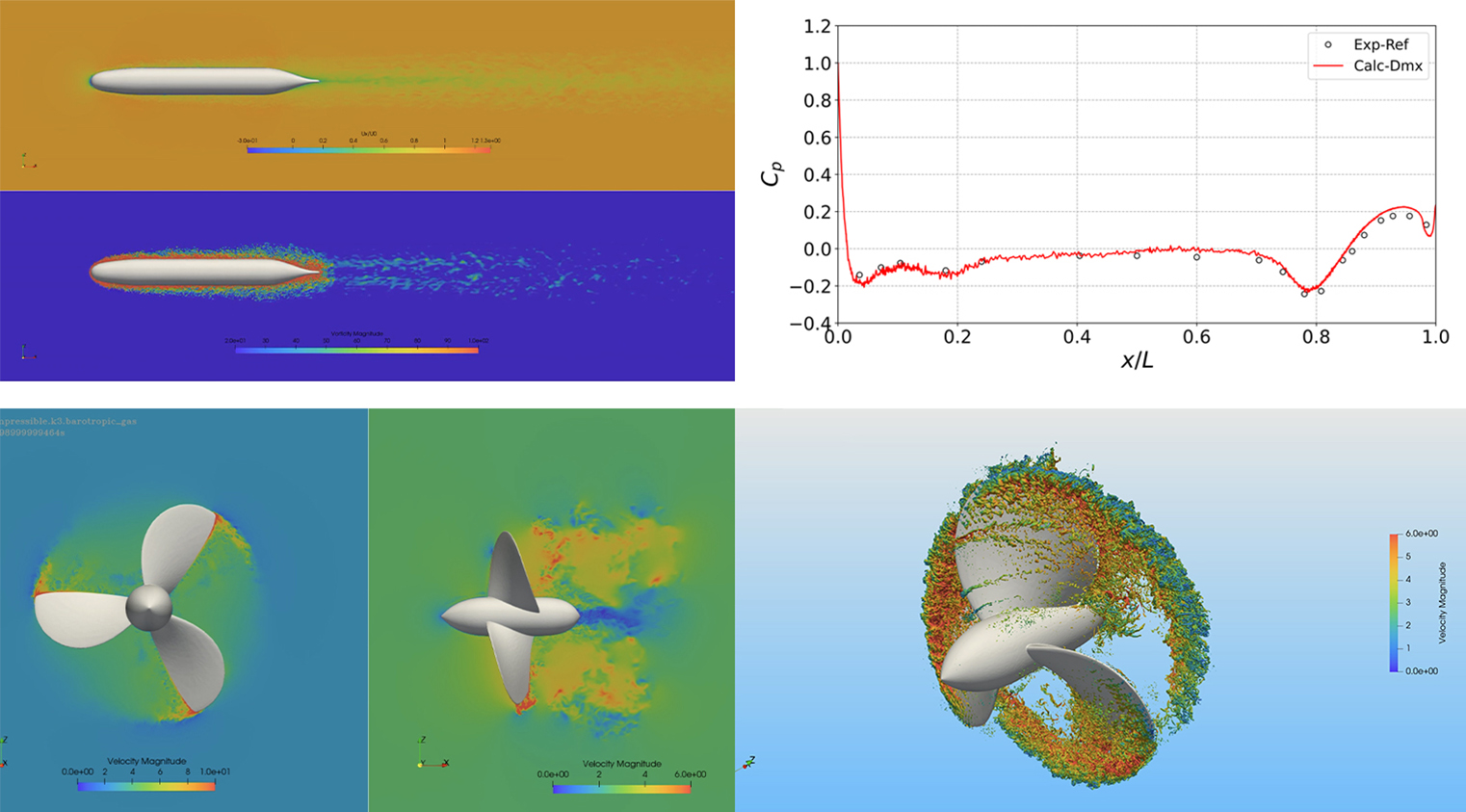
海洋船舶工业仿真解决方案介绍

Solution Advantages

Cost Reduction & Efficiency Improvement to Break Bottlenecks in Marine Turbulence Resolution

Powered by high-order STE_KEP_FR algorithm and GPU parallel framework, model-free solving is adopted to directly resolve fine turbulence structures. Combined with overset mesh scheme (body-fitted structured mesh for near-wall region + Cartesian mesh for background region) to reduce mesh volume, it greatly improves the resolution scale of turbulence problems in marine and ocean engineering under equivalent computing costs.
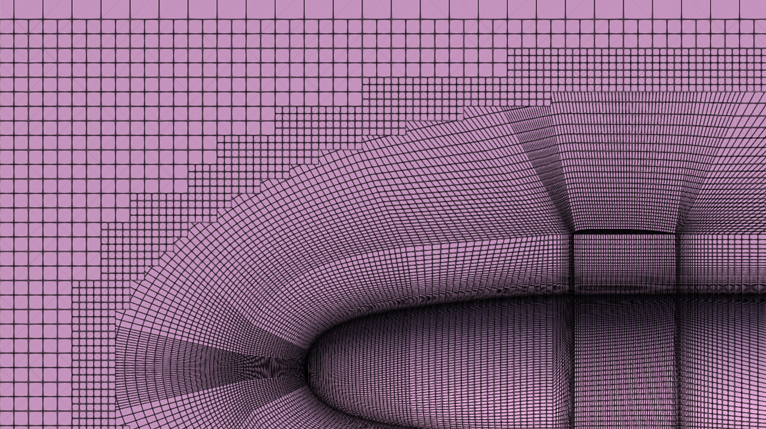
Cost Reduction & Efficiency Improvement to Break Bottlenecks in Marine Turbulence Resolution

High-precision Turbulence Data & Dynamic Capture of Complex Motions

Model-free solving delivers high-precision turbulence data for marine flow problems. The noise prediction module accurately forecasts unsteady hydrodynamic and flow noise characteristics of underwater vehicles. Combined with static/dynamic IBM algorithm, it enables fast simulation of complex vessel motions (such as torpedo launch and multi-body coupling), capturing dynamic variation of pulsating pressure and evolution of vortex structures.
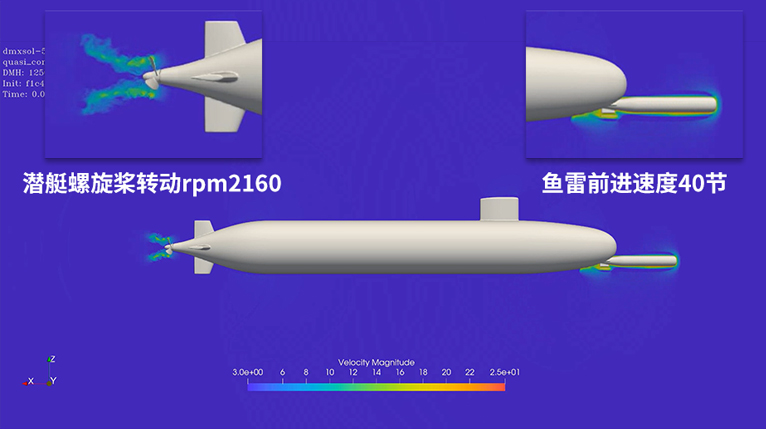
High-precision Turbulence Data & Dynamic Capture of Complex Motions

Multi-device Coverage & Upgrade of Resolution Scale

Supports multi-physics coupling simulation for submarine nuclear power systems (reactors, steam turbines, pumps & valves etc.), and unsteady two-phase flow calculation of steam generators, condensers, pump-valve systems under real engineering conditions. The resolution scale is increased by 2–3 times under identical computing costs.
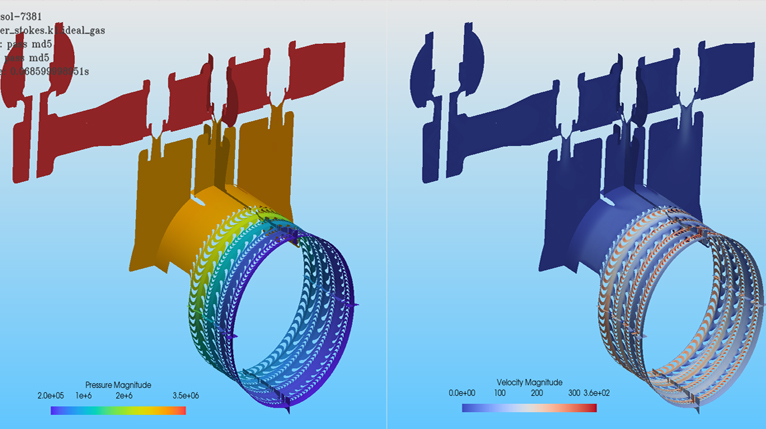
Multi-device Coverage & Upgrade of Resolution Scale

Eliminate Model Impacts and Improve Cavitation Simulation Accuracy

Equipped with homogeneous flow and refined two-phase flow solving schemes based on homogeneous flow equations and interface tracking algorithms. Custom two-phase models can be imported to reduce model dependency for two-phase problems like cavitation and boost simulation accuracy. With high spatiotemporal resolution from core algorithms, numerical bias brought by cavitation models can be eliminated, directly restoring the physical process of cavitation.
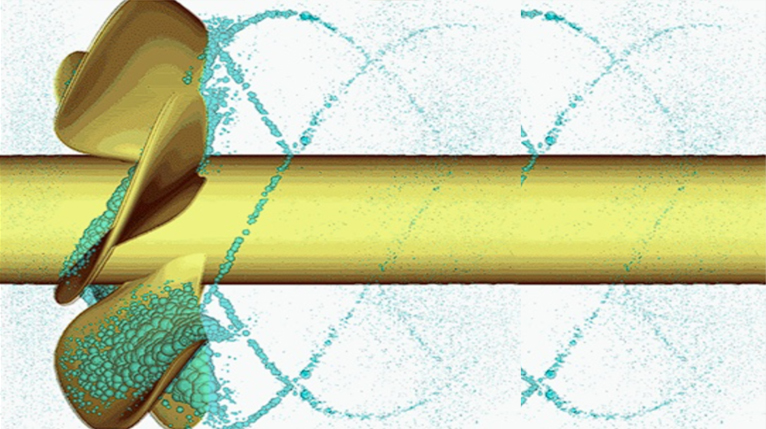
Eliminate Model Impacts and Improve Cavitation Simulation Accuracy

2030 · Trillion Grid Points · Thousand-Second Simulation Ultimate Restoration · Start a New Era of Physics-AI

Copyright © 2026 Suzhou Rankyee Technology Co., Ltd.  苏ICP备2025208929号

Sitemap | Privacy Policy

Top