Low-Altitude Economy Solution
Break through bottlenecks of traditional simulation in accuracy and cost
Shorten product R&D cycle, reduce trial-and-error costs, and help enterprises seize the technical high ground in the low-altitude economy track
Shorten product R&D cycle, reduce trial-and-error costs, and help enterprises seize the technical high ground in the low-altitude economy track
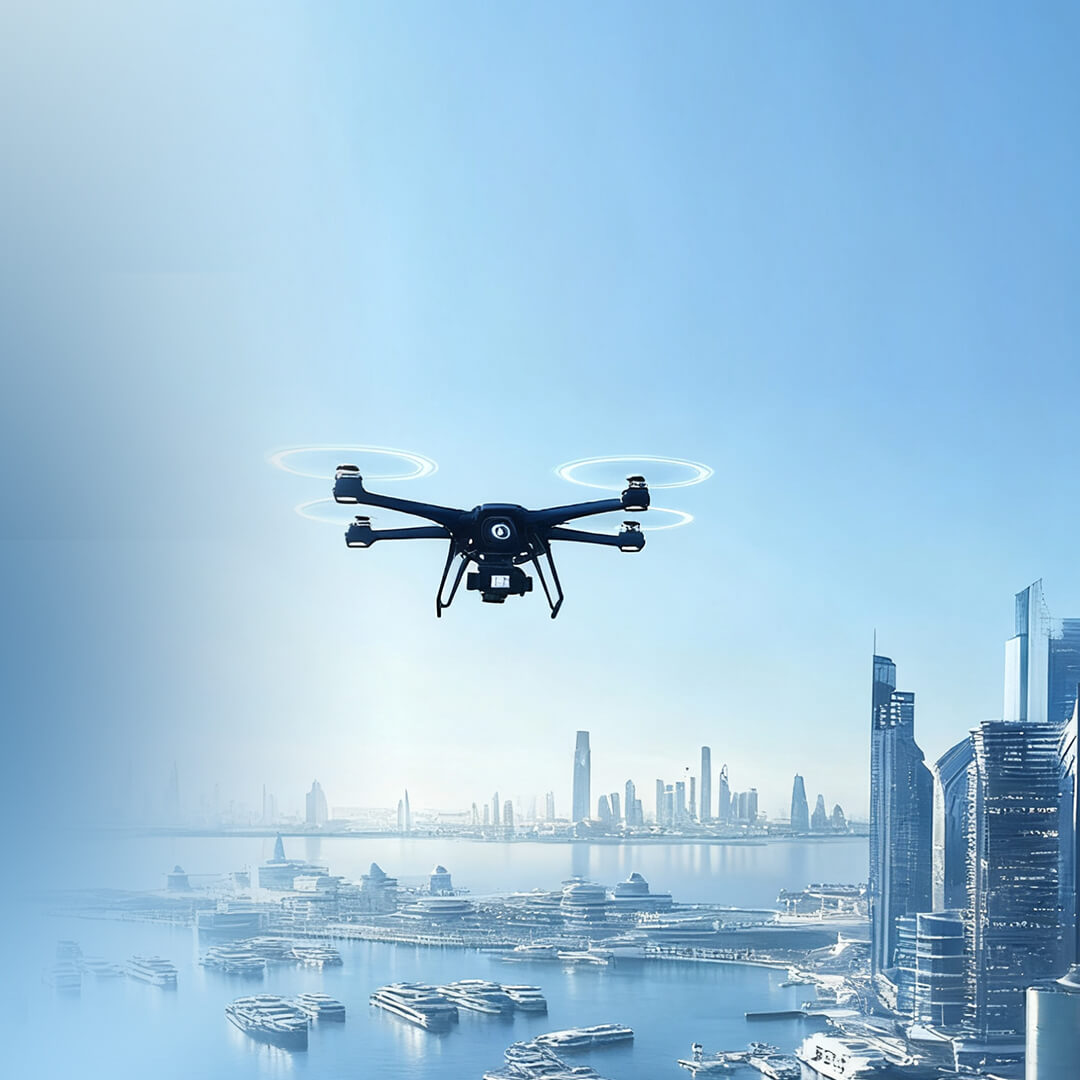
Centered on high resolution, low cost and multi-physics collaboration, the eVTOL low-altitude economy & UAV solution adopts LES transient simulation and native GPU acceleration of DIMAXER software to break the accuracy and cost bottlenecks of conventional simulation. It delivers full-process high-fidelity design tools for eVTOL/UAV, accelerates product R&D cycles, cuts trial-and-error costs, and helps enterprises capture technical advantages in the low-altitude economy industry.
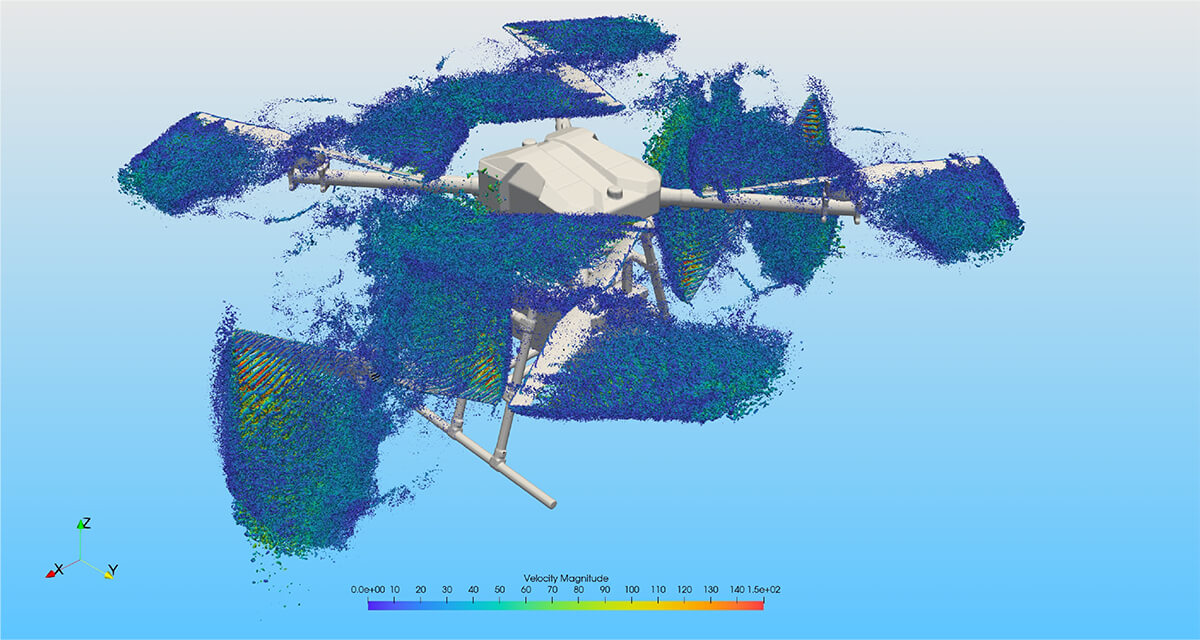
DIMAXER’s LES transient simulation plus native GPU acceleration boosts computing speed by 10–100 times compared with conventional software, compressing complex simulation time to 1/3 of traditional schemes. It reduces wind tunnel test requirements by 90%, shortens R&D cycle from months to weeks, cuts trial-and-error cost by over 50%, and supports fast iterative verification of multiple design options.
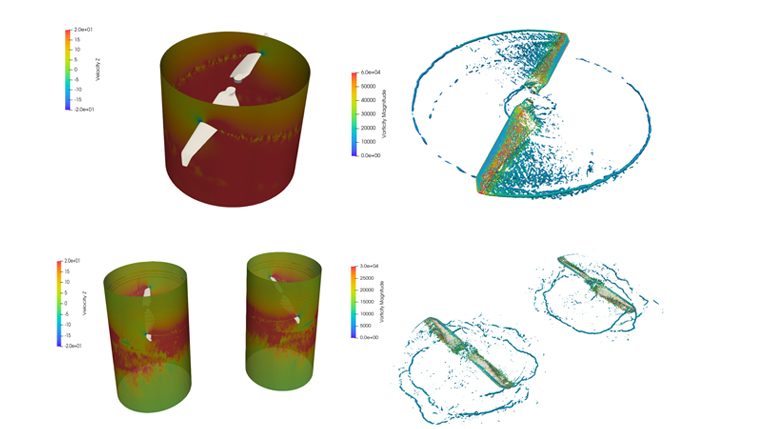
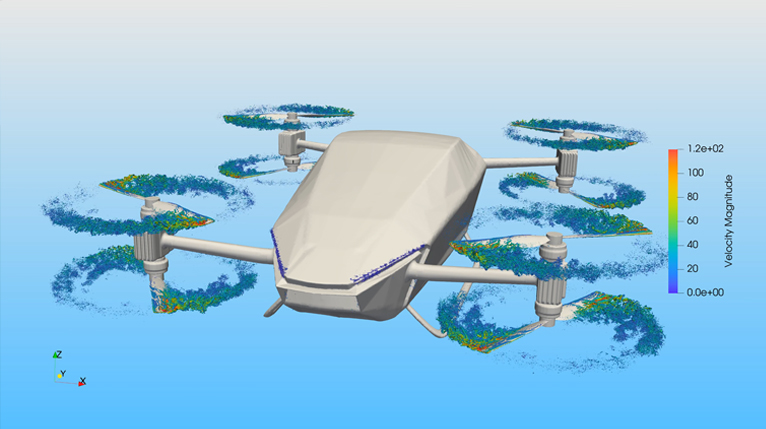
Based on high-order flux reconstruction discretization combined with fully hexahedral meshes, model-free solving is used for complex flows to precisely capture details such as flow transition, separation and wake vortices. LES transient simulation directly resolves unsteady flow fields and removes dependency on turbulence model parameters. The prediction accuracy of complex flows including inter-rotor airflow interaction and downwash effect is improved by two orders of magnitude, with aerodynamic design error controlled within 2%.
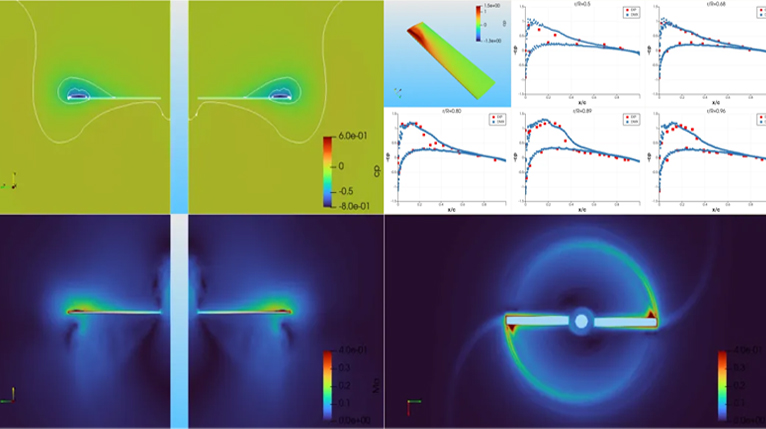
DIMAXER integrates multi-physics coupling modules. Dynamic IBM is used to handle complex motions, combined with a space-time decoupled integrated explicit time-advancing algorithm to realize real-time multi-physics coupling. The efficiency of integrated simulation for aeroelastic deformation and structural strength of multi-rotor eVTOL is increased by 10 times, supporting collaborative design in multiple scenarios such as rotor-fuselage interference and thermal management.
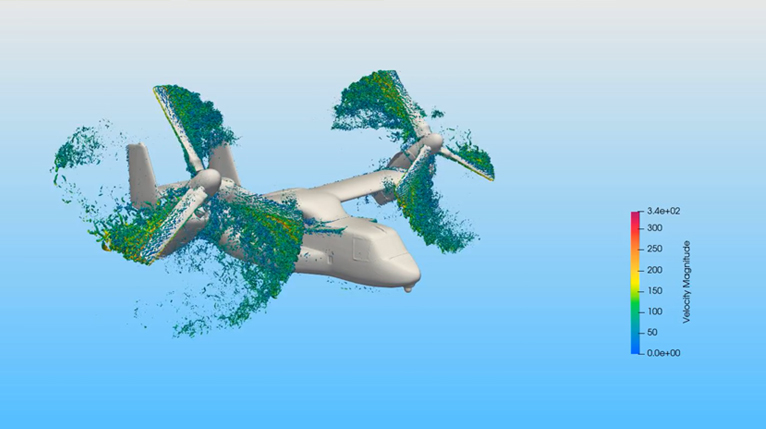
The software is natively GPU-accelerated and compatible with consumer-grade graphics cards. Combined with the "magazine computing model" and fully asynchronous parallel architecture, computing cost grows linearly with simulation scale without convergence issues. Large Eddy Simulation with 360 million solution points only requires 8 GPUs, and the computing cost is merely 2.5% of traditional supercomputing schemes. SMEs can perform billion-cell mesh simulation with desktop GPU clusters, reducing hardware investment by 100–1000 times and popularizing high-precision simulation.
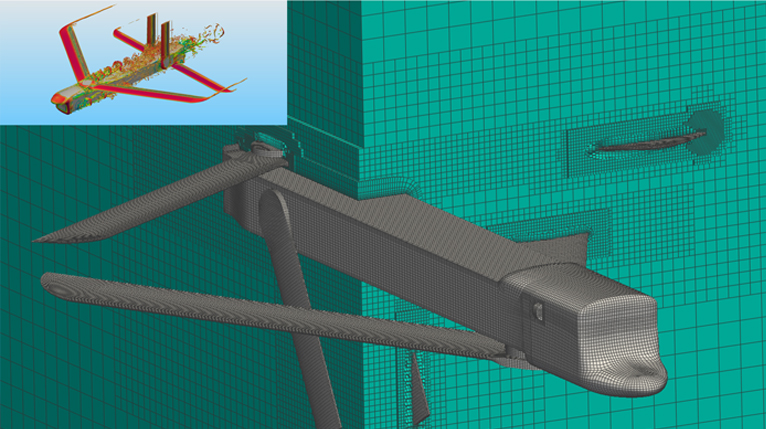
LES transient simulation delivers high-fidelity flow field, noise and vibration data. Together with post-processing modules, quantitative indicators compliant with airworthiness standards can be output. It provides credible data for aerodynamic design, aeroelasticity and aeroacoustics to speed up airworthiness certification.
Hotline
0512-65115975 18915575295
Follow Rankyee Technology
For more updates